Workshop
I believe in building in the open, sharing my process, and workshopping concepts. Here is a collection of half baked ideas, tech experiments that got part of the way there, and a home for lost ideas. I trying to be better about updating and documenting so come along and explore with me!
Apple Scanner 2.0
Revisiting a 2017 machine-learning checkout concept.
(re)Started Oct 2026 - In progressRecognition & Training
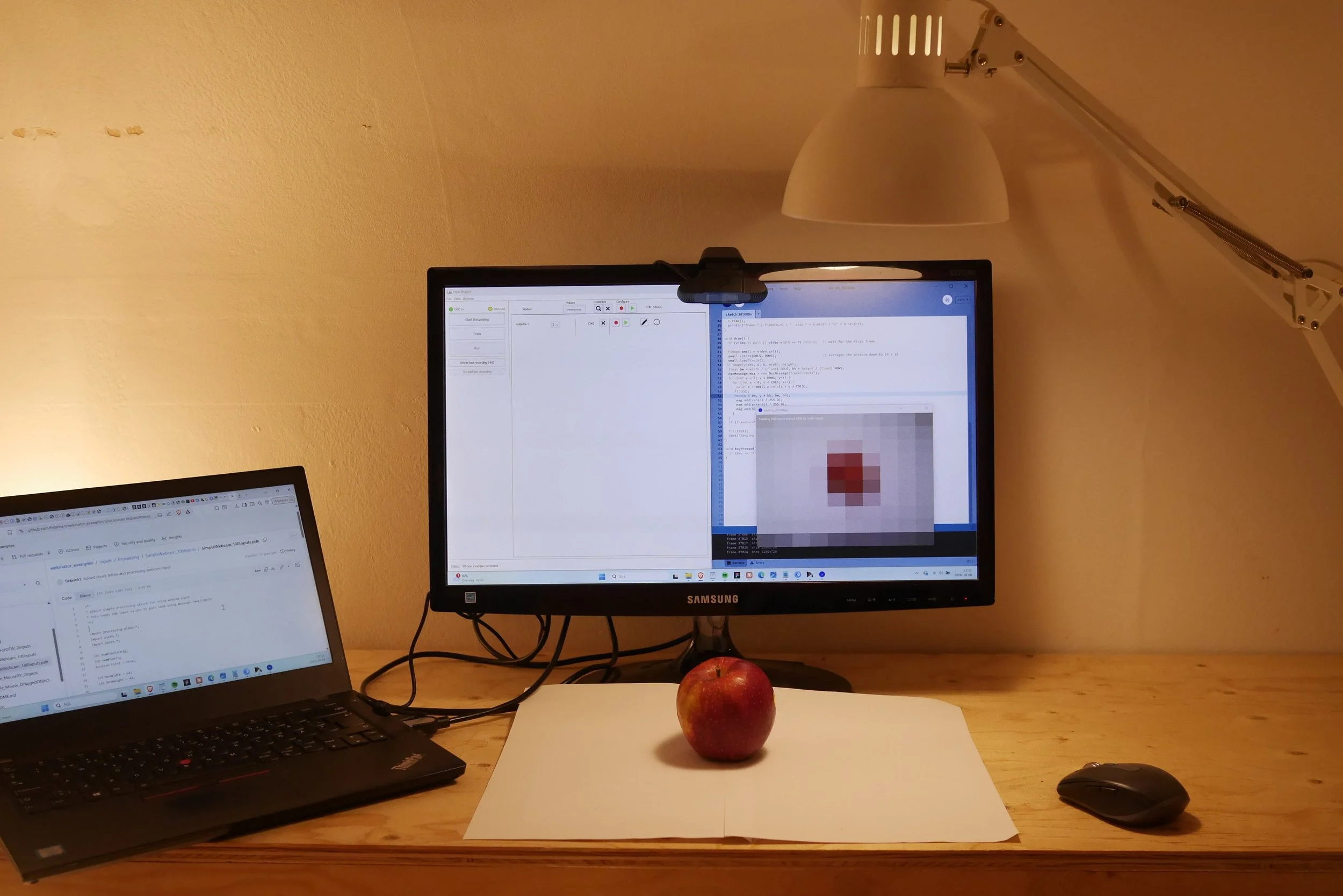
Train a small image model on the webcam with Wekinator-style examples: Apple or nothing. Next step it to train more test produce.
Once the model is trained, Wekinator and Processing communicate via OSR and the prototype has the bones in place to integrate into a mobile app checkout flow.
Place what you want to by on the counter → item identified & added to cart → payment process
How can emerging tech cover the gaps that the original prototype had due to project constraints? Can I push this experience prototype farther with vibe coding and improved machine learning tools?
In 2017 at Veryday I prototyped a self-checkout that recognised loose fruit with machine learning, for a Swiss retailer's concept store. Nine years later the tools are on every laptop. I'm rebuilding it in a weekend-sized format: a webcam, a small trained model, an Arduino light and my own phone as the payment step. I chose to go back to the original program, Wekinator, because it lets me shape the model's behavior live, in the loop with the experience, and supports continuous, sensor-driven interaction that a label classifier can't.
What I see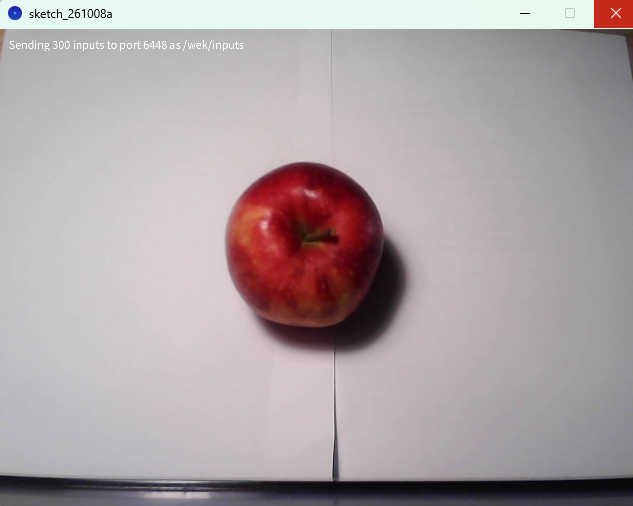
What Whekinator 'sees'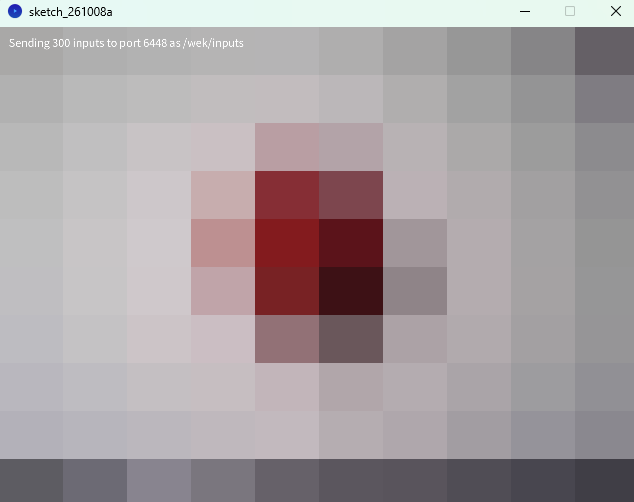
What I've Learned
How (and when) the model is trained is vital to the prototype’s quality.
When training the model, getting stuck training static states, like just the apple, created a super rigid prototype that didn’t work with the actual use case. Training the action of placing the apple and moving the apple allowed the model to capture differing edge states. Training with different lighting was also a big learning.
If I were to smooth the experience prototype experience we did in 2017, I wouldn’t be as precious about the data set that I used to create the ‘proof of concept’ prototype. As a part of the setup on the day of the experience prototype workshop I would retrain the model with the day’s lighting context and current produce state.
Secret emotion of objects
Experience prototype working with filmmaking.
2019Ever wonder what your devices are feeling when you’re trying to connect them to a speaker or headphones? Do they have a preference? Are they curious? During this project I explored storytelling and film as a prototyping tool.
What I've Learned
Playfulness opens up unexpected avenues to explore
During this project I explored the various ways for inanimate objects to communicate and express emotion. This led to using music and sound design to drive the narrative. As we move into increasing ubiquitous computing contexts, having a playful view of how devices communicate can only help my design perspective.