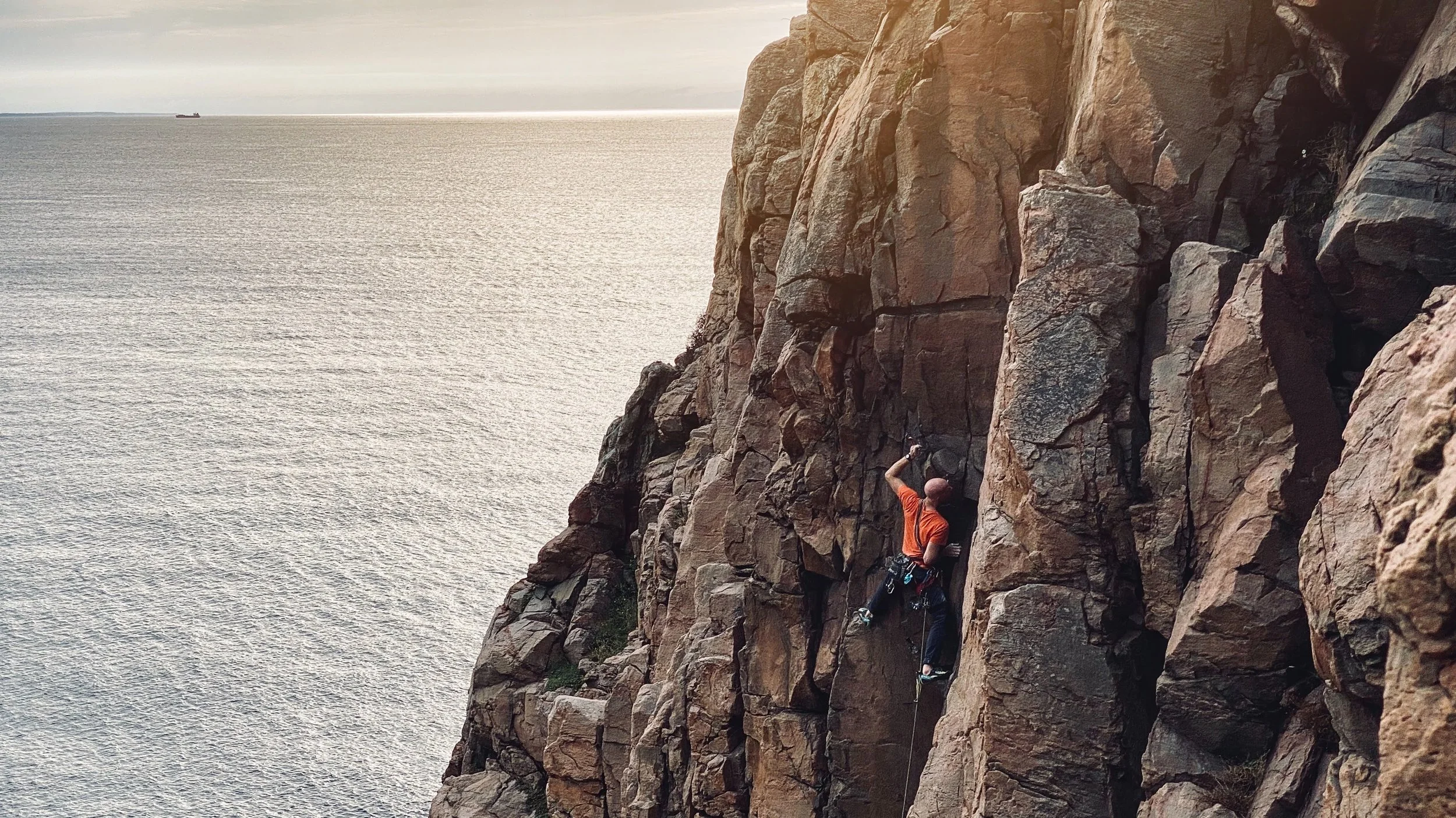
Mapping system actors and designing impact models to unlock new financing ecosystems at the intersection of outdoor lifestyle and public health — with Friluftsfrämjandet and AFRY Experience Studios.
Outdoor recreation for the public good
Friluftsfrämjandet, one of Sweden's largest outdoor recreation organizations, sought to understand how their activities could be positioned within emerging impact financing ecosystems. The positive externalities produced by outdoor recreation — improved mental health, social cohesion, cleaner natural environments — remain largely unaccounted for in existing funding models.
I led the design and facilitation of a systems-oriented innovation project that mapped the actor landscape, identified leverage points for systemic intervention, and generated future scenarios to inform strategic decision-making. The work combined participatory design workshops with systems analysis to produce actionable pathways toward novel financing models.
From system mapping to strategic scenarios
The project operated in Phase 0 — a foresight and sense-making phase focused on mapping the current system state before identifying pathways for disruptive innovation. I designed a five-stage process combining participatory research with systems analysis techniques.
01
Knowledge Transfer
An alignment session using Bill Sharpe's Three Horizons Framework to surface current challenges, organizational strengths, and a shared vision among internal stakeholders.
03
Actor Mapping
Mapping actors along axes of knowledge and power. Relationship analysis surfaced alliances, conflicts, and broken connections — revealing leverage points for intervention.
02
System Mapping
Participatory identification of trends, system structures across economics, culture, practice, and institutional domains — and the niche innovators working to address challenges within each.
04
Scenario Design
Two leverage points — political support and social solidarity — were used to generate four future scenarios, each defining Friluftsfrämjandet's role, required partnerships, and strategic positioning.
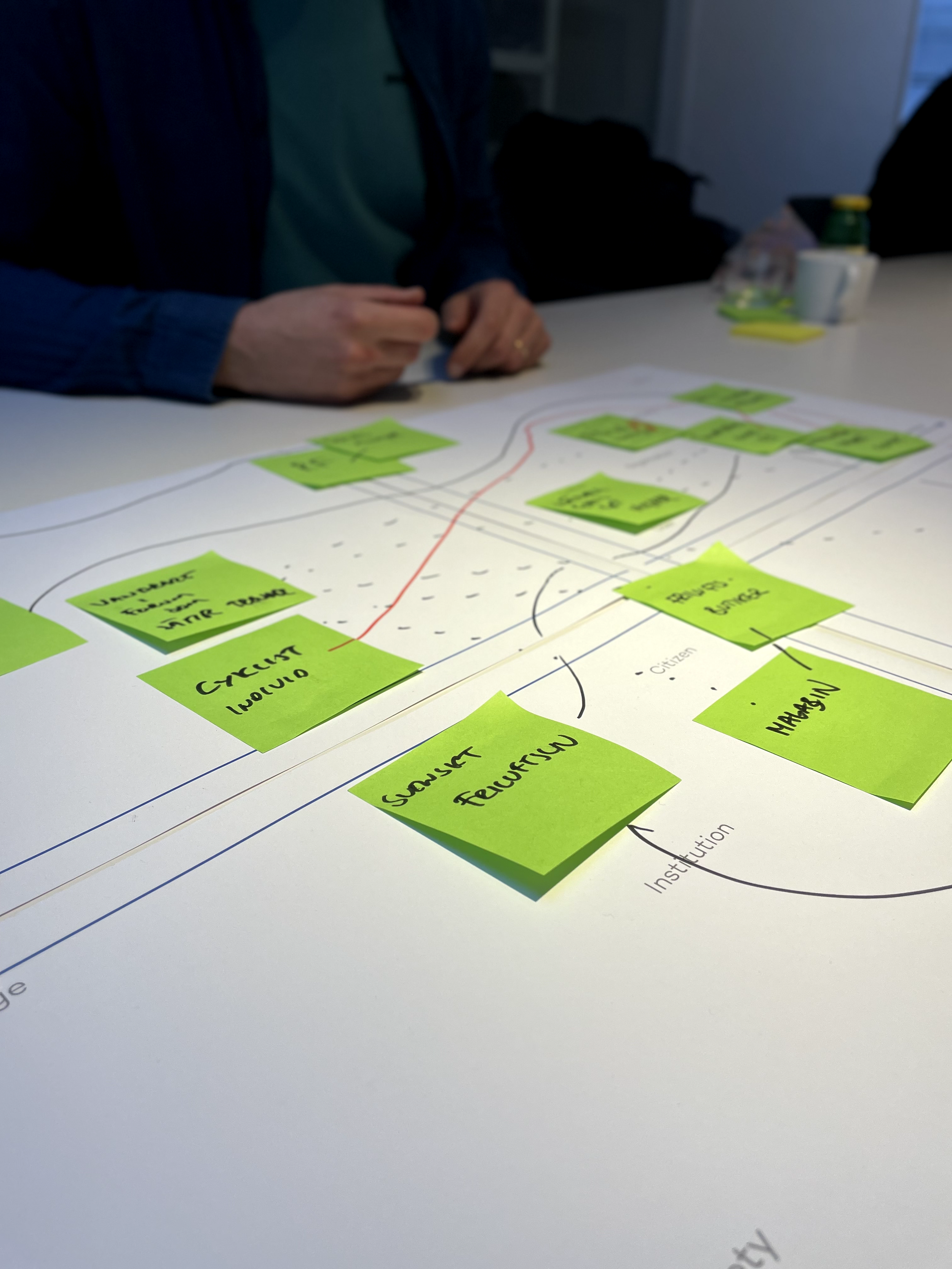
Actor mapping workshop
Actor landscape and power dynamics
The actor mapping revealed a fragmented landscape where conflicts stemmed from actors with high political power but low domain knowledge, while knowledgeable actors lacked the power or financing to drive change. Strengthening connections across this divide emerged as a key pathway to systems transition.
“Making or strengthening situational connections is one pathway to systems change.”
Political & Natural Infrastructure
High power, low knowledge. Political actors and natural infrastructure (Allemansrätten, municipalities, Klimatminister). Power doesn't match domain expertise — a primary source of system conflict.
Crowd-Sourced Impact
Low power, low knowledge. Adjacent actors like schools, outdoor suppliers, and media with limited ability to directly influence the domain.
Knowledge-driven power
High power, high knowledge. Public sector specialists and large nonprofits (Socialstyrelsen, STF, Friluftsfrämjandet). Financing and influence stem from institutional scale.
Outdoor Lifestlye as Social Glue
Low power, low knowledge. Adjacent actors like schools, outdoor suppliers, and media with limited ability to directly influence the domain.
Two pathways for impact financing
The project produced two distinct focus areas — each with identified strategic partners, measurable co-benefits, and a clear connection to impact financing models.
Focus Area 1
Future of Nature Access
Positioning Friluftsfrämjandet as a securer of sustainable outdoor lifestyle in urban-adjacent nature areas. An impact model supporting inclusive access to nature, with co-benefits including increased diversity in outdoor activities and measurable reductions in anxiety and depression.
Partners: Cities with climate transition targets, social impact financers, local schools, insurance companies.
Focus Area 2
Defining ‘Friluftstimme’ Value
Developing a tradeable unit of outdoor recreation value — the "friluftstimme" (outdoor hour) — calibrated by activity type, environmental cost, group size, and integration into everyday life. A key step toward proof-of-impact financing.
Partners: Progressive municipalities and regions (Helsingborg, Blekinge), impact financiers, nature tourism sector.
“Designing incentive structures for funding public goods can be done through the accounting of additionality value that otherwise goes unaccounted for or extracted.”
Reflection
This project exemplifies how strategic design practice can operate at the systems level — not just producing artifacts, but reshaping how actors understand their position within a complex system and identify pathways for collective action.
The combination of participatory workshops, actor mapping, leverage point identification, and scenario design created a rigorous foundation for decision-making in conditions of deep uncertainty. By the project's end, Friluftsfrämjandet had not only a map of their current system but a set of actionable pathways — with named partners, defined metrics, and clear next steps toward funding applications through Formas, Vinnova, and EU Horizons.
The work sits at the intersection of futures thinking, systems transition, and impact finance — a space where design's capacity to make the complex tangible and actionable is most needed.